Life Without Regrets: The Difference Between Making a Decision and Making a Choice

“The wisest choices honor both what you think and what you feel.”
“Have you ever made a decision that you later regretted?”
When I introduce myself to a new group, I often begin with that question. Then I raise my hand.
One person raises a hand. Then another. Soon, nearly everyone in the room is participating.
So I add, “You know, one of those decisions that you’re still kicking yourself for!?”
That is usually when every hand goes up.
The room fills with knowing smiles, nervous laughter, and the quiet recognition that we have all been there. We have all said yes when we wanted to say no. Stayed when we wanted to leave. Accepted advice that did not feel right. Settled because fear whispered, “What if you fail?”
Then I say, “My name is Joy. If you’d like to learn the secret to living the rest of your life without regrets, let’s have a conversation.”
People often ask for my business card after that. Why? Because the question reaches beneath the polite surface. It touches the place where you may still be carrying an old decision like a heavy suitcase you never meant to pack.
After more than 25 years of coaching thousands of individuals and businesses, I have learned this: you do not have to erase your past to create a more peaceful future. You do have to reclaim your ability to choose.
When regret feels like quicksand
Have you ever replayed a conversation and thought, Why did I say that?
Have you ever looked at your career, relationship, family situation, or finances and wondered, How did I get here?
Do you find yourself blaming someone else for advice you followed, then turning around and blaming yourself for listening?
Regret can pull you under like quicksand. The more you struggle against it, the more trapped you feel. You may become stressed, angry, ashamed, or desperate to regain control.
Sometimes change arrives slowly. Sometimes it happens without your consent and takes your breath away. Either way, you may feel as if you are standing in the middle of a road with no clear direction.
That does not mean you are weak. It means you are human.
Psychologists generally describe regret as the painful comparison between what happened and what you believe could have happened if you had acted differently. Research also suggests that people often regret actions in the short term, but over time, missed opportunities and inaction can become the heavier burden. The goal, then, is not to pretend you will never regret anything. The goal is to turn regret into information instead of allowing it to become a life sentence.
You can read more about the psychology of regret through the Association for Psychological Science.
A decision is not always a choice
In everyday conversation, we often use the words decision and choice interchangeably. In my coaching work, I make an important distinction.
A decision may be an answer you arrive at after pressure, fear, financial circumstances, or someone else’s expectations have entered the driver’s seat.
A choice comes from within. It considers what you truly want, what feels right to you, and what aligns with your values.
This does not mean every choice produces the result you hoped for. Choosing from within is not a magic wand. It is a practice of integrity.
When you make a decision primarily to please someone else, you may later say, “I knew I shouldn’t have done that.” If the outcome is disappointing, you may blame the person you listened to. Then you mentally beat yourself up for giving away your authority.
But when you choose from within, you own the experience.
If it turns out as expected, you celebrate your victory. If it does not, it may sting, but you are less likely to regret the effort, the risk, or the opportunity to grow. You can say, “This was my choice. Now, what can I learn?”
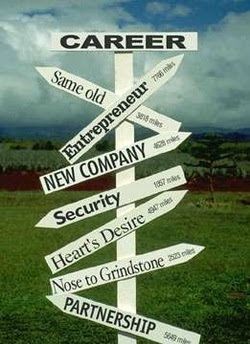
“You are allowed to choose a new direction.”
Who is driving your life?
I often use the image of a car to describe personal responsibility.
Some people let someone else drive. They hand over the keys and let someone else decide where they go.
Some sit in the backseat. They can see the road, but they do not take control.
And some are so afraid that they end up in the trunk.
Where are you sitting?
Are you allowing a parent, partner, employer, friend, or former version of yourself to decide what comes next?
Are you waiting for someone else to give you permission to pursue the career, relationship, lifestyle, or dream you want?
Living a life without regrets means taking over the controls. It means honoring your feelings, taking time to think and feel before choosing, and then committing to the direction you select.
You may still encounter wrong turns. You may need to change lanes. You may even discover that the destination you thought you wanted is no longer right for you.
That is not failure. That is awareness.
Life is more like a rollercoaster than a quiet Sunday drive. You have to get in, strap yourself in, and take a risk. There may be moments when your stomach drops. There may also be moments when you laugh, shout, and realize you are more alive than you have felt in years.
What choosing from within looked like in my own life
Let me share something personal.
By age 27, after many miscarriages, my husband and I were advised by my physician not to try to become pregnant again. It was a painful season. One of those soul-stirring seasons that can leave you feeling tender, disappointed, and unsure what comes next.
Then we saw a television program about adoption.
Something in me became very clear.
It was not loud. It was not dramatic. It was simply steady. Deep inside, I knew adoption was the right course for us.
Not everyone agreed.
My husband’s parents believed he already had enough responsibility with two children from previous marriages. My parents worried that a baby would interfere with business plans, family vacations, and moving forward.
In other words, the outside voices were strong.
And if I had made a decision based only on pleasing other people, I might have talked myself out of it. I might have chosen the path that looked more convenient to others. I might have abandoned what I knew in my heart.
But this was a choice.
My husband and I adopted a beautiful little girl, and I have never regretted that choice.
That does not mean life became easy or neatly tied up with a ribbon. There were difficult years that followed, including the eventual end of my marriage 20 years later. But let me say this clearly and with all the dignity it deserves: that was not my daughter’s fault. Not at all.
Looking back, I can see I hadn't yet learned how to set priorities. I wanted to do everything. I was still learning how to honor what mattered most and how to choose with clarity in more than one area of my life.
That matters, because I have made other decisions I regret. Decisions made to please family. Decisions made because I ignored my own inner voice. Decisions that looked acceptable on the outside but didn't sit right with me.
This was different.
Even though other parts of life did not unfold exactly as I might have hoped, the choice to adopt my daughter has remained one of the greatest blessings of my life. We have had our normal ups and downs, as any mother and daughter do, but I am deeply grateful that she is my daughter.
That is the difference I want you to see.
A choice made from inner knowing can remain meaningful, solid, and regret-free even when the rest of life takes unexpected turns.
10 practices to get unstuck and live with fewer regrets
These practices will not guarantee perfect outcomes. Nothing can. They can help you make more intentional choices, improve personal effectiveness, and move forward with greater clarity.
1. Pause before you respond
✔️ Give yourself space before answering an important request, email, invitation, or question.
Try saying:
“Let me think about that.”
“I’ll get back to you tomorrow.”
“I need a little time before I answer.”
A pause interrupts the reflex to please, defend, panic, or rush. It gives your wisdom a chance to catch up with your emotions.
2. Separate your desire from other people’s expectations
✔️ Write two lists:
What I genuinely want
What other people expect me to want
Be honest. Is the career path yours, or is it a role someone else designed for you? Are you staying in the relationship because it is healthy and meaningful, or because you are afraid of disappointing someone?
Other people may offer opinions. They do not have to live the consequences of your choice: you do.
3. Name the fear beneath the decision
✔️ Complete this sentence: “If I choose what I really want, I am afraid that…”
Perhaps you fear failure, rejection, financial insecurity, conflict, loneliness, or being judged.
Fear becomes more manageable when you name it. You may discover that the real question is not, “What should I do?” but, “Am I willing to feel uncomfortable while I do what matters?”
4. Check the choice against your values
✔️ Identify your three to five most important values, such as honesty, family, freedom, creativity, stability, service, health, or growth.
Then ask:
Does this option honor my values?
Will I respect myself while living with this choice?
Am I choosing short-term relief at the expense of long-term peace?
Values provide an inner compass when the road ahead is foggy. They are a powerful personal growth strategy because they help you choose who you want to be, not simply what you want to avoid.
5. Separate facts from assumptions
✔️ Draw a line down a page. Label one side Facts and the other Assumptions.
Under facts, write only what you know to be true. Under assumptions, write what you fear, predict, or imagine.
For example:
Fact: I have not applied for the position.
Assumption: They will never hire someone like me.
This small exercise can loosen the grip of anxiety and help you see where you need more information.
6. Ask what is within your control
✔️ Make three lists:
What I can control
What I can influence
What I must release
You can control your preparation, communication, boundaries, effort, and response. You cannot control another person’s feelings, a company’s decision, or every unexpected event.
Trying to control the uncontrollable is exhausting. Reclaiming what is yours is freeing.
7. Imagine both action and inaction
✔️ Consider two possible futures:
If I take this step, what might I gain, risk, or learn?
If I do not take this step, what might I gain, risk, or learn?
Do not imagine only the worst-case scenario. Also consider the cost of staying exactly where you are.
Ask yourself: Which regret would be heavier five years from now: the discomfort of trying or the ache of never knowing?
8. Seek wise counsel without handing over authority
✔️ Talk with someone who is thoughtful, trustworthy, and able to listen without taking over.
Ask for perspective, not permission.
A wise counselor may help you see a blind spot. A supportive coach may help you identify options. But no one else can feel your feelings, carry your values, or live your life for you.
Receive guidance. Keep the keys.
9. Take one small test step
✔️ You do not always need a five-year plan. Sometimes you need a safe experiment.
You might:
Schedule an informational interview.
Take one class.
Have one honest conversation.
Spend a weekend exploring a new environment.
Update your résumé.
Set one boundary.
Try a new routine for two weeks.
Small steps create evidence. Evidence creates confidence. Confidence helps you get unstuck.
10. Own and review the result
✔️ After you act, resist the urge to immediately label the outcome as success or failure.
Instead, ask:
What happened?
What did I learn about myself?
What would I repeat?
What would I do differently?
Where is the lesson, blessing, or gift?
I believe every experience holds a lesson, a blessing, or a gift. Sometimes it is obvious right away. Sometimes you need distance to see it.
The gift may be new strength. The lesson may be a boundary. The blessing may be the clarity to choose differently next time.
A simple decision-versus-choice exercise
Take a current situation where you feel stuck. Write the following:
The situation:
What decision or issue is in front of me?
The outside voices:
Who am I trying to please? What expectations, advice, or pressure am I carrying?
The inner truth:
What do I really want? What feels right when I become quiet enough to listen?
The fear:
What am I afraid will happen if I choose from within?
The aligned choice:
What option best reflects my values and the person I am becoming?
The next step:
What can I do within the next 24 to 72 hours?
Then commit to reviewing the experience later: not to criticize yourself, but to learn.
Trusting yourself is not a one-time achievement. It is built through repeated acts of listening, choosing, acting, reflecting, and trying again.
“Every experience holds wisdom worth discovering.”
You are allowed to choose a new direction
I grew up in Hollywood, where trips to Santa Monica with my mother made the ocean feel like a special kind of freedom. Later, when my family moved to Las Vegas and my father decided to build a home in the middle of the desert, I thought my life was over.
Fortunately, the trips to Montana continued. So did visits to California and the beach. I water-skied as a child on Swan Lake, but my heart has always belonged to the sea. To this day, I find solace and belonging near the ocean.
Life did not always place me in the landscape I wanted. But I learned that an unexpected chapter is not necessarily the end of the story.
You may be in a desert season right now. You may feel stuck in a relationship, career, family situation, or personal decision. But you are not powerless.
You can pause. Listen inward. Take the wheel.
Living life without regrets does not mean every outcome will be pleasant. It means you stop abandoning yourself in the process. You learn honestly. You practice self-compassion. You take responsibility for your next choice and allow each Life Lesson to shape your path.
If you are ready to explore how to get unstuck, clarify your purpose, and create a practical goal-setting strategy, I invite you to have a conversation with Joy & Associates. You can schedule a complimentary session with Joy.
And as you reflect on where you have been and where you are going, explore Legacy Lessons. Your experiences hold wisdom worth preserving: not only for your future self, but for the people whose lives your story may one day touch.
Take charge of your life. It starts with a conversation. You’ll be glad you did.
Joy Huntsman, Master Coach & Founder, Joy & Associates